
Microsoft · Dynamics 365 sales · Ignite 2024
Copilot Deal Accelerator
A north-star concept for proactive, action-centred selling, built in 30 days, shown in the Microsoft Ignite 2024 keynote, and a bridge to the autonomous agent era.
ROLE
Lead designer · experience strategy
YEAR
2024
COMPANY
Microsoft
Scope
North-star concept
Focus mode: the few actions that matter today, each with a reason, one-tap execution, and a Copilot log for transparency.
20 sellers
B2B sellers researched, two phases
~30 days
Concept to keynote-ready vision
Ignite 2024
Featured in the opening keynote
$3B
Investment decision influenced
At a glance
Experience strategy & systems thinking
Role
Jul – Aug 2024 · ~30 days
Timeline
Vice President, Design manager, Designer
Team
North-star concept for Ignite
Platform
What I did
Led the experience strategy and design coherence across the whole concept.
Synthesised research with 20 B2B sellers into one clear direction.
Defined an action-centred model and shaped the Ignite keynote story.
Featured in the Ignite 2024 keynote · influenced a $3B decision
overview
Turning a seller's chaotic day into focus.
This is a case study about designing clarity out of complexity, fast.
Sellers do not lack data. They drown in it: dozens of active deals, endless CRM updates, email, meetings, and targets, with the few high-value actions buried under admin noise. The Deal Accelerator reframed Copilot from a reactive assistant into a proactive partner that manages a seller's attention and keeps them in control.
I led the experience strategy: synthesising research with 20 B2B sellers, exploring interaction models, and defining a coherent, action-centred vision. The constraint made it harder and more interesting. The whole concept had to be conceived, designed, and made keynote-ready in roughly 30 days, ahead of Microsoft Ignite 2024. It went on to anchor how Microsoft talked about AI-assisted selling, and it laid the conceptual groundwork for the autonomous agent direction that followed.
context
A vision for the hardest part of the sale.
In mid-2024, ahead of Ignite, the Dynamics 365 Sales team wanted to show how Copilot could meaningfully help sellers during the most critical phase of the journey: closing and deal execution. Not another assistant that answers questions, but a partner that helps people focus, prioritise, and act with confidence, without adding cognitive or operational load.
The brief was a forward-looking, north-star concept: something to communicate direction and possibility, not a finalised feature spec. The output had to be clear and credible enough to carry a keynote, and grounded enough that leadership could see a real product behind it.
The problem
Not a shortage of data, a shortage of clarity.
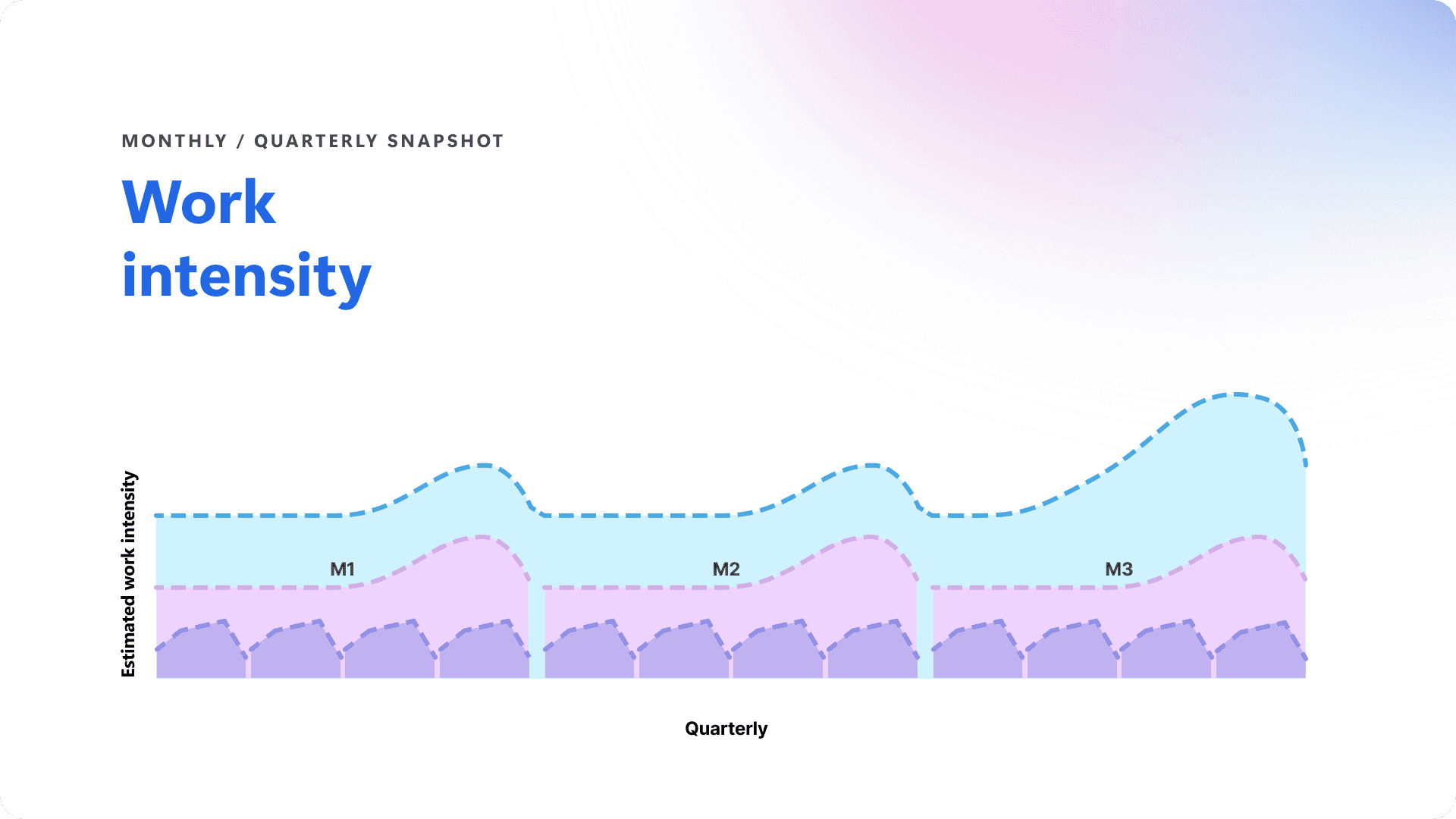
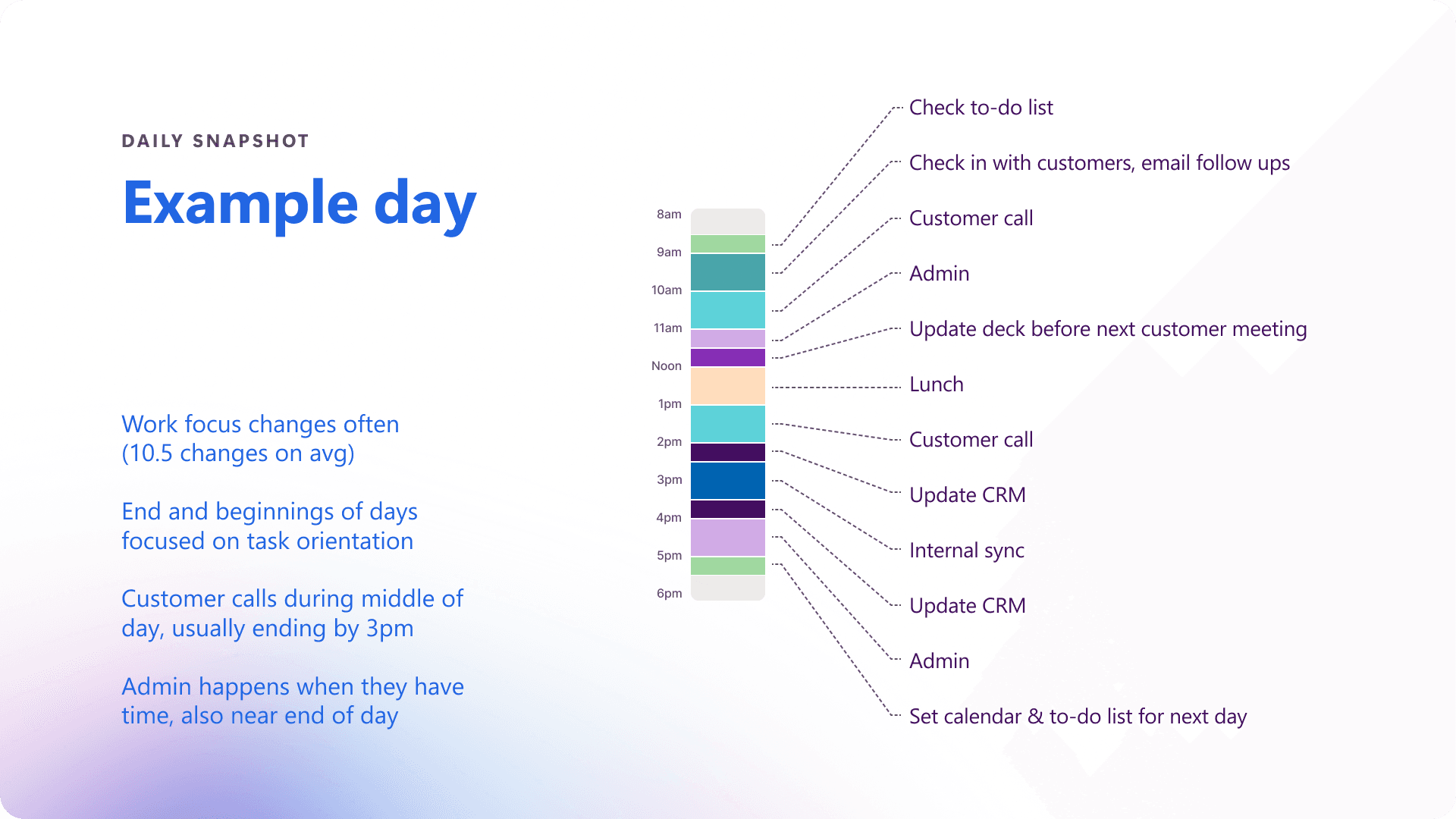
A seller's day is fragmented: customer calls and follow-ups, internal coordination, CRM updates, email across many stakeholders, and constant target tracking. As deadlines approach, that fragmentation intensifies. The challenge is not a lack of tools or information. It is the difficulty of staying oriented, of knowing what matters most right now across many active opportunities.
Sellers spend significant time planning and re-planning rather than executing.
Important follow-ups slip or are missed under the overload.
CRM captures data well, but offers little decision guidance.
Constant context-switching between tools drains focus.
High-value actions stay buried under administrative noise.
Distilled to one line, the research said the same thing again and again: sellers do not need more data. They need clarity, prioritisation, and momentum.
my role
Owning the vision and its coherence.
I joined the Dynamics 365 Sales team in July 2024 and worked on this through July and August, leading up to Ignite. My role was to envision the end-to-end Copilot-assisted sales experience, drive design explorations across multiple interaction models, synthesise the research into a coherent direction, and partner closely with leadership to keep the vision aligned with what was feasible.
I worked alongside a senior executive leader, a senior design manager, and a senior designer. While others kept us anchored to current customer needs and technical constraints, I was primarily responsible for the systems thinking, experience strategy, and design coherence across the concept: making the parts add up to one believable whole. And all of it inside a roughly 30-day window.
Research
Twenty sellers, two phases, one theme.
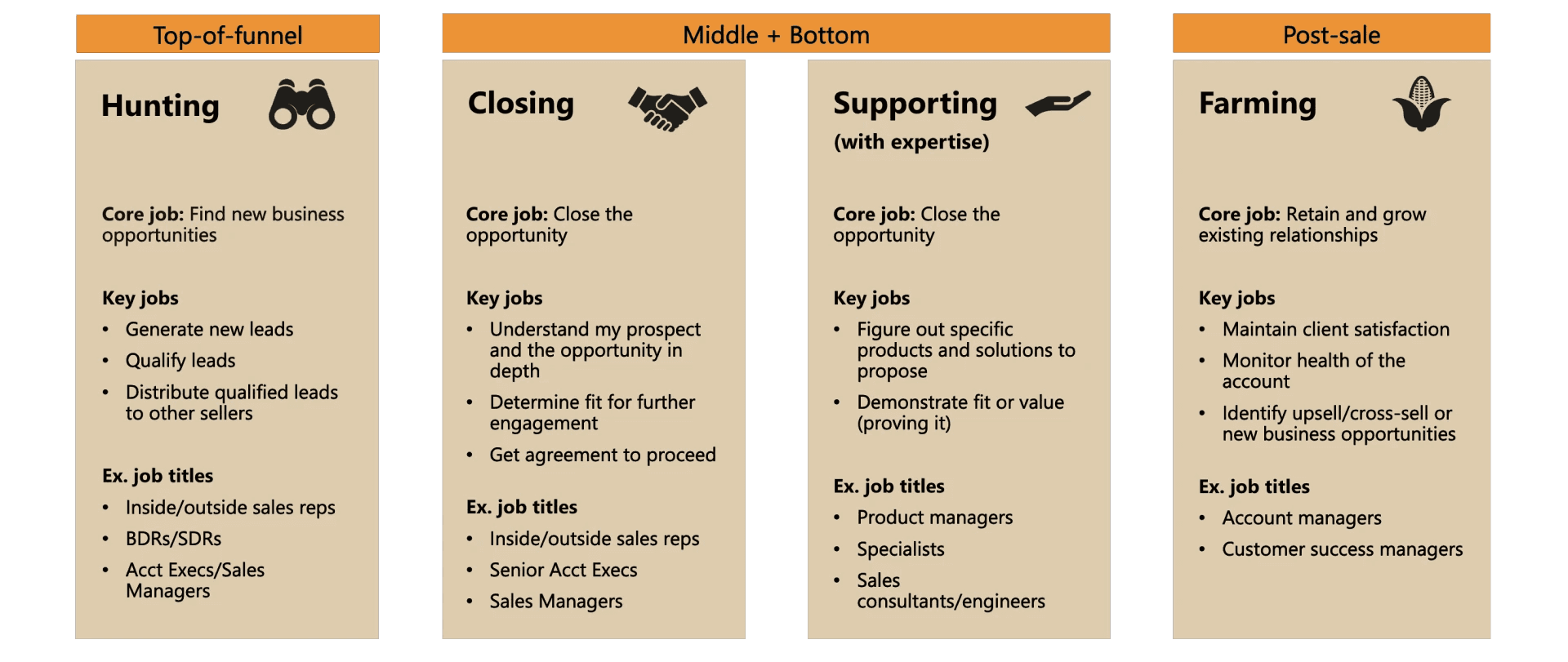
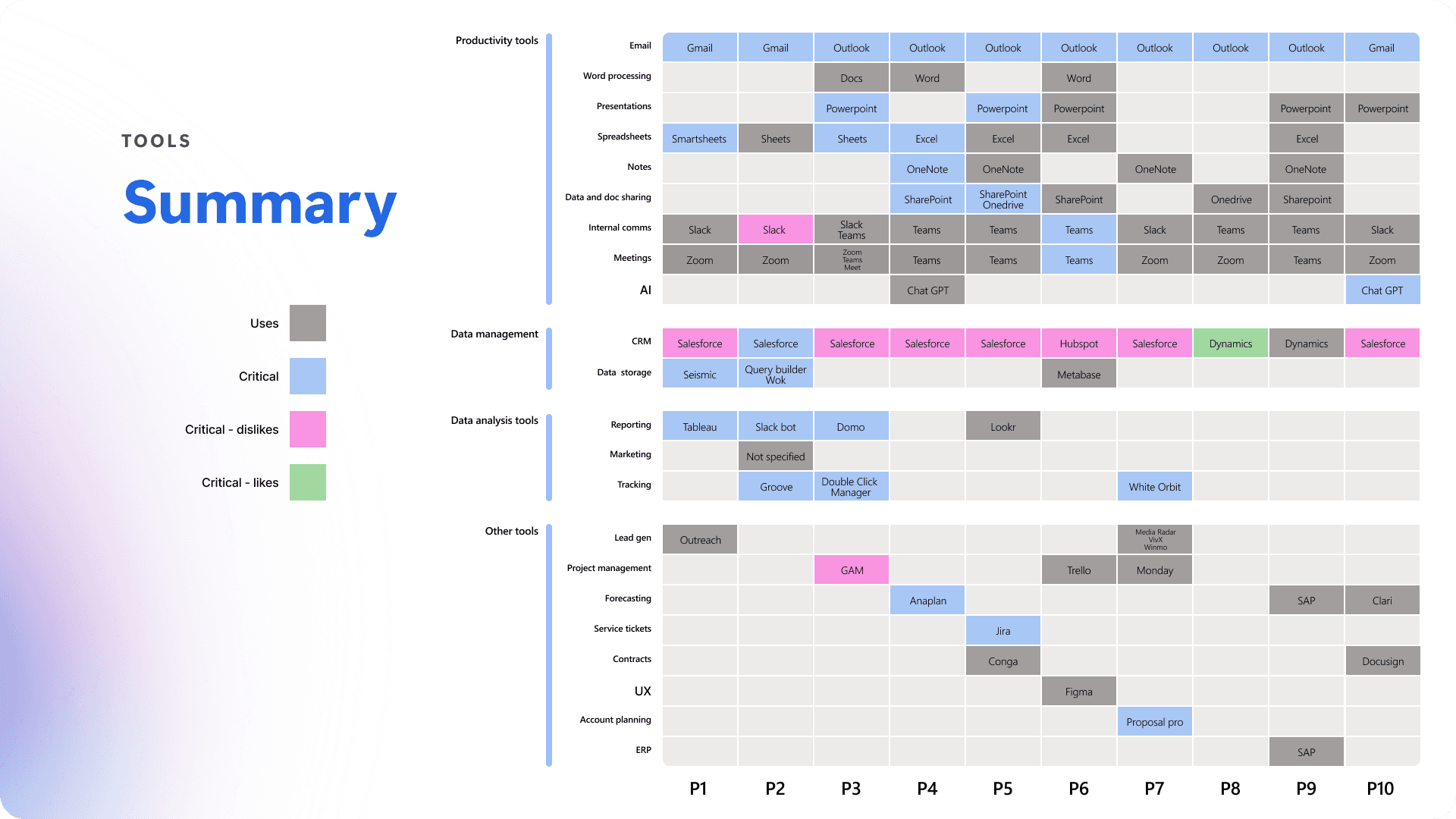
To ground the vision rather than guess at it, we ran qualitative research with 20 B2B sellers across two phases: full-time CRM users with over a year of experience, in large sales organisations, working across both hunting and closing, in a range of domains.
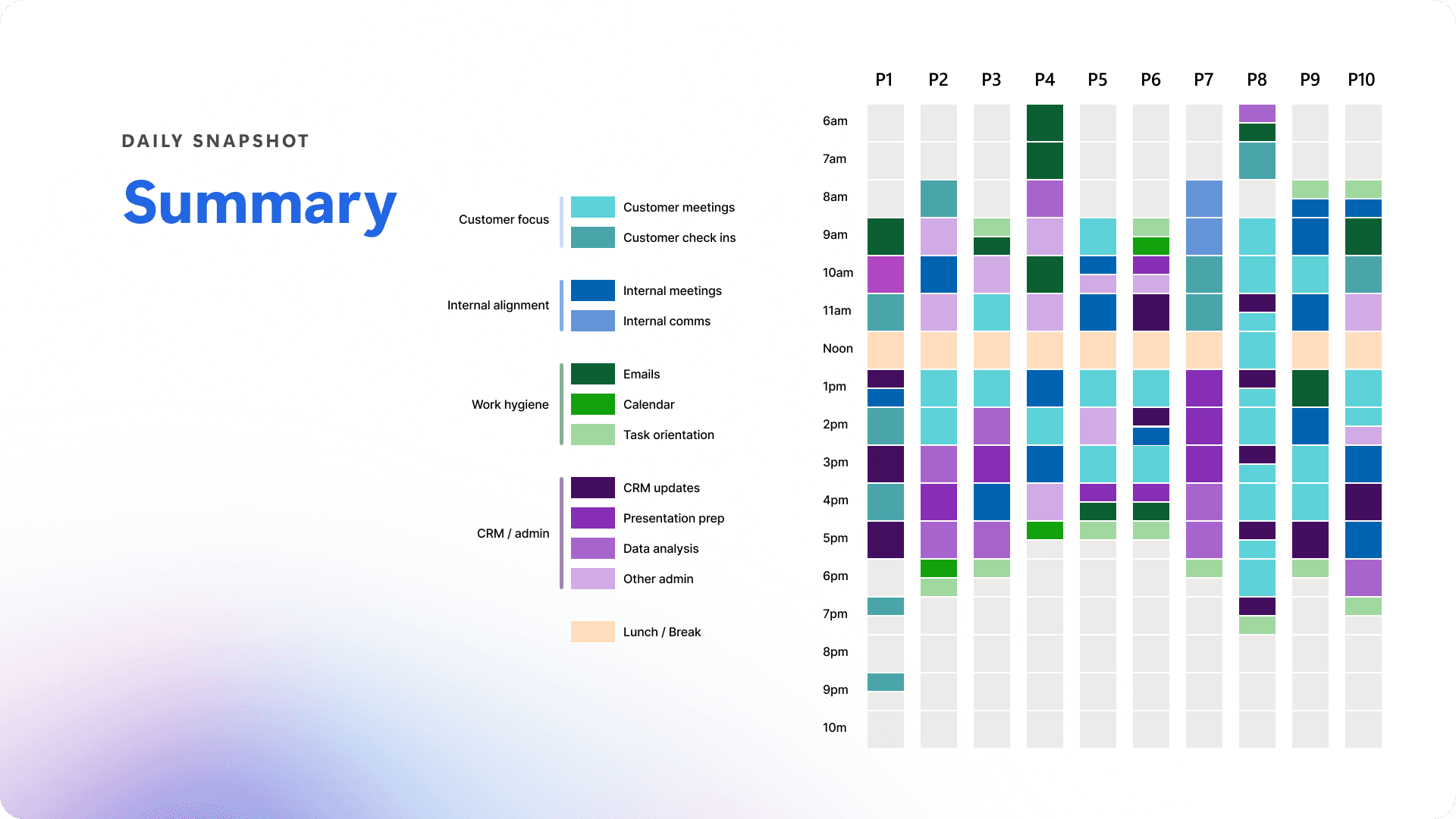
Sellers spend large parts of the week on planning, CRM updates, and follow-ups, often at the cost of actually selling.
Many struggle to respond to email in time, simply from volume and context-switching.
High performers lean heavily on external tools and personal systems to stay organised.
Sellers value clear guidance on which accounts and opportunities to focus on each day.
Target tracking and gap analysis matter, but eat time.
The insight that shaped everything: the job to be done was not analysis, it was momentum. Help people see what matters and act on it.
The core of the work
Designing complexity into focus.
The hard part was taking a genuinely complex, high-pressure way of working and reducing it to something that felt calm and obvious, in a single keynote-ready concept. Here is the complexity I was designing for, and how I cut through it.
The complexity I was designing for
A fragmented day. Calls, meetings, CRM, email, targets, and dozens of active deals, all competing at once.
Data without direction. The CRM held everything and guided nothing.
Proactive AI is risky. Acting on a seller's behalf can erode trust the moment it gets something wrong.
Many working styles. New sellers need guidance; veterans want speed and control.
It had to scale. Across desktop, mobile, and the agent-driven future to come.
Thirty days. Conceived, designed, and made keynote-ready in about a month.
How I cut through it
Manage attention, not tasks. Surface the few things that matter now, not another to-do list.
Action cards as the unit of work. Each opportunity becomes an evolving state that generates a clear next action.
Progressive disclosure. Summaries first, depth on demand, so nothing overwhelms.
Human-in-the-loop AI. Copilot suggests and executes, but the seller can pin, reorder, pause, or override.
One model, many modes. Visual, conversational, and voice, for different moments.
A single spine. One coherent idea the whole keynote could hang on.
The design was about attention, not data. Help a seller see what matters now, and act on it with confidence.
Design move 01
From data to decisions.
The trust question: does the system tell me what to do next, or just show me more?
Rather than another dashboard, I treated opportunities as evolving states that naturally generate actions. A focus mode surfaces the small set of things that need a seller today, each with a plain-language reason for why it matters now. The seller starts from a decision, not from a wall of data, which is exactly what the research said they were missing.
Design move 02
The action card as the epicentre.
The trust question: can I act in one move, and undo it if I want?
Through iteration, the action card became the heart of the experience: one opportunity, one reason, one suggested action, and one-tap execution, with the option to snooze, pin, or hand it to Copilot. Less scalable ideas were deliberately discarded so this single, repeatable pattern could carry the whole concept across surfaces.
One opportunity, one reason, one action, fully reversible. The repeatable unit the whole concept is built from.
Design move 03
AI you stay in control of.
The trust question: is Copilot working for me, or running off on its own?
Proactive AI only works if people trust it, and trust collapses the first time it acts without permission. So I built control into the core: Copilot suggests and can execute, but the seller can always pin, reorder, pause, or override. A visible Copilot log shows what it did and why. The aim was a partner that earns more autonomy over time, rather than one that assumes it.
Copilot suggests and executes. The seller stays in command, and can always pin, pause, or override.
Design move 04
One vision, many modes.
The trust question: does it fit how I actually work, in the moment?
Selling happens at a desk, between meetings, and on the move, so the concept supported several modes of the same model: a kanban view for a bird's-eye read of the pipeline, focus mode to concentrate on a prioritised few, and conversational and voice interaction for hands-busy moments. Different surfaces, one coherent way of thinking.


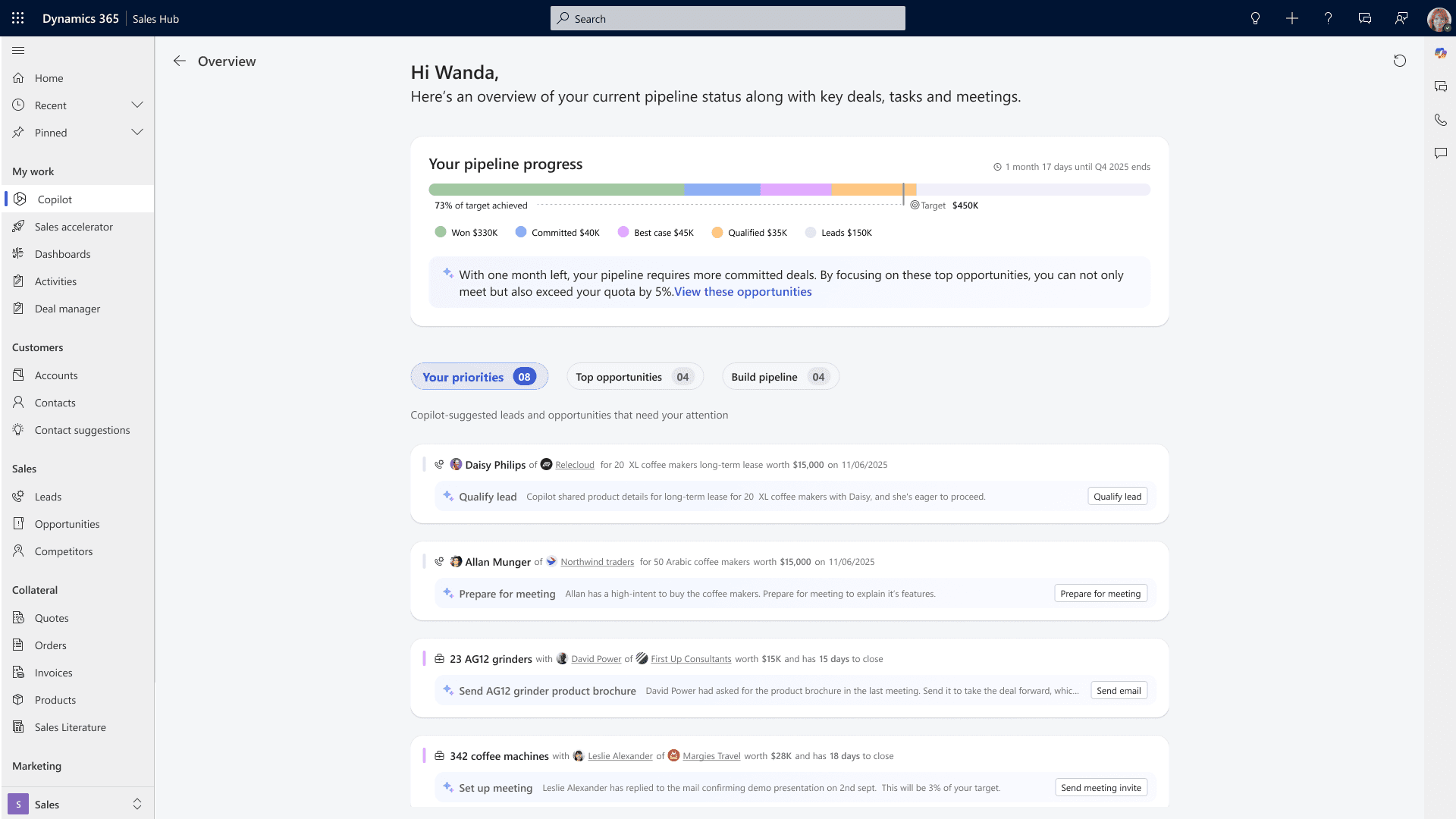
Copilot proactively conducts reserarch, drafts outreach, schedules meetings, builds intelligent context around an opportunity and helps the seller to focus on the most important work to achieve his goals.
Leadership
A cohesive vision in thirty days.
The hardest constraint was time. We had roughly a month to go from research to a compelling, demo-ready vision that could carry a keynote. I kept the team converging rather than expanding: anchoring every exploration to the single idea of attention and action, framing decisions around what would scale rather than what looked clever, and cutting ideas that could not earn their place. The discipline was as much about saying no as designing yes.
Impact
A keynote, and a direction.
The Copilot Deal Accelerator was shown as a demo of Copilot Actions and featured in the Microsoft Ignite 2024 opening keynote. It drew strong recognition from senior leadership for the clarity of the vision, the willingness to challenge existing paradigms, and the quality of execution under a tight deadline.
Its real value went beyond the demo. It gave leadership a tangible picture of Copilot operating at scale across complex sales scenarios, reduced the ambiguity around large future investments, and influenced a $3B product investment decision. Most importantly, it acted as the strategic bridge between assistant-style Copilot and the autonomous agent direction that came next.
Reflection
This project reinforced how I want to work: design for decision-making, not just workflows; treat AI as a system partner, not a feature; and hold clarity and coherence steady in an ambiguous, fast-moving environment. It showed me how far a strong, research-grounded vision can move product strategy, even in thirty days.
What it taught me
Principles for AI-assisted work.
A few ideas from this project now travel with me into every AI experience I design.
Design for decisions, not dashboards.
People rarely need more data. They need to know what matters now, and what to do about it.
Manage attention, not tasks.
The scarce resource is focus. Protect it instead of adding another list.
Let AI act, but keep the human in command.
Proactivity earns trust only when it can always be paused, reordered, or overridden.
A vision is a research artefact, not a guess.
The most persuasive concepts are the ones grounded in what real people actually struggle with.
The bridge
From a concept to the agent era.
The Deal Accelerator did more than headline a keynote. It articulated how Copilot could evolve from a reactive assistant into a proactive, outcome-driven partner, and that thinking fed directly into Microsoft's move toward autonomous sales agents. The next chapter of that story is the first agent built on it.
next